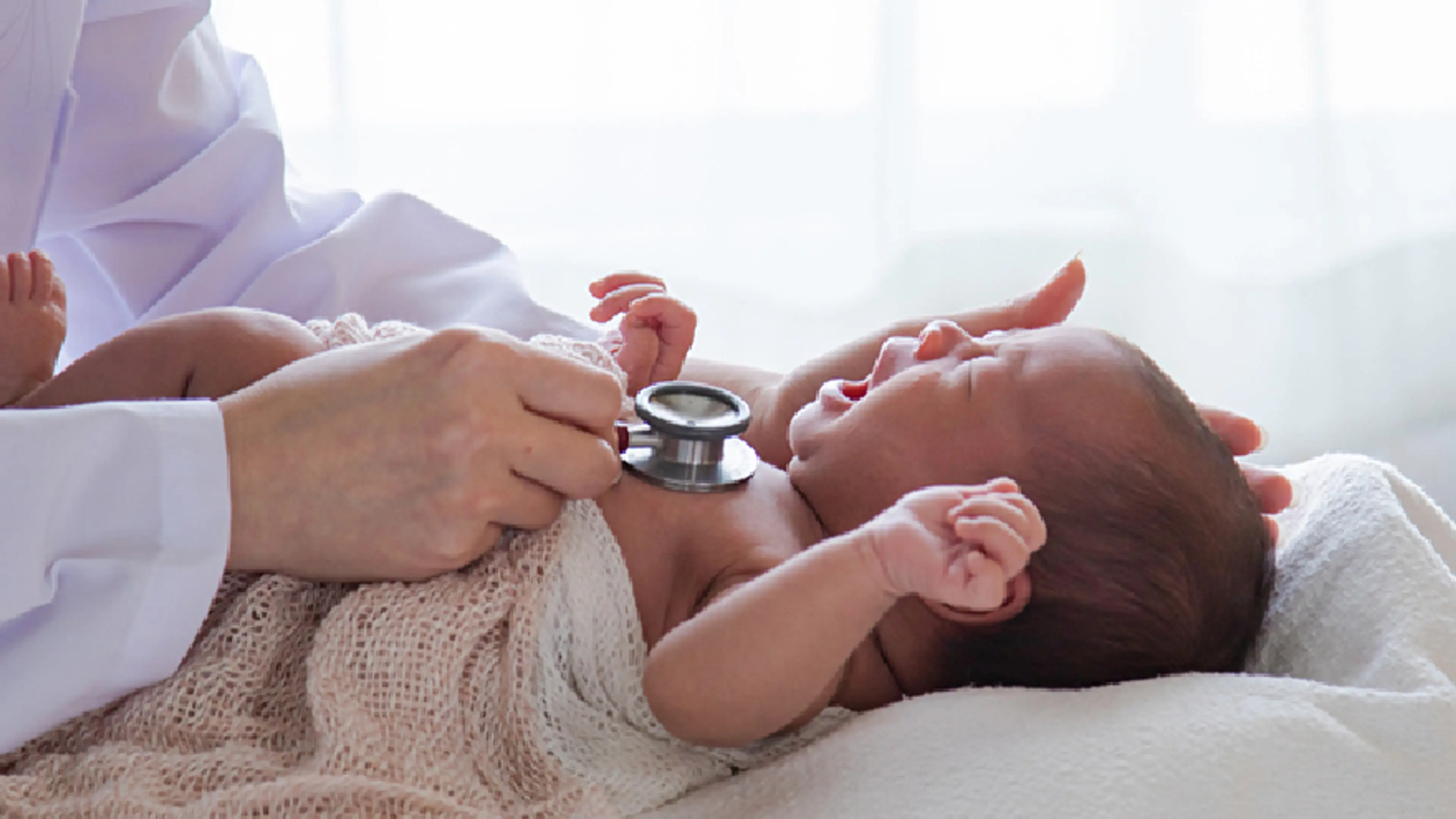
Hearing does not gradually develop—it starts working immediately from the moment a baby is born. A newborn’s auditory system is highly developed and can absorb surrounding sounds, voices, and speech cues right after birth. This is one of the first senses that helps promote a child’s cognitive and emotional development.

But what if something feels off? What should you do if your baby doesn’t respond to sound or seems unusually quiet?

This article explains what to watch for, which signs are serious, and how early intervention can help.

Why Early Hearing Matters: The Critical Window for Language Development

why-early-hearing-matters:-the-critical-window-for-language-development

In the first year of life, a baby’s brain creates over one million new neural connections every second. Many of these are stimulated through hearing. This period is often referred to as the “critical period for language acquisition.” If hearing problems go unnoticed during this time, that window may pass.

This is why international guidelines recommend the following:

  • Hearing screening by 1 month of age
  • Detailed hearing evaluation by 3 months if necessary
  • Initiation of support or treatment by 6 months

Why is this timing so crucial? Because children who receive support within the first 6 months can often develop language skills comparable to children with normal hearing. Even a few months’ delay in detection or treatment can have a lasting impact on speech, learning, and social interactions.

In Korea, newborns typically undergo hearing screening before being discharged from the hospital, which is reassuring. However, not all hearing issues are detectable at birth. Some develop later or are mild enough initially to go unnoticed. That’s why parental observation and regular pediatric check-ups are so important.

Developmental Milestones and Red Flags

developmental-milestones-and-red-flags

While every child grows at their own pace, there are typical signs of hearing and speech development at each age. These aren’t just trivia—they are essential markers for early detection of problems.

0–3 Months:

0-3-months:
  • Startle reflex to loud sounds (blinking, body tensing)
  • Calms when hearing a gentle voice, especially parents’ voices
  • Turns slightly toward familiar voices
  • Different cries for different needs, showing early voice variation

If these reactions are not observed by 3 months or your baby seems very quiet or unresponsive, it may be a cause for concern. Some parents may think, “My baby is just quiet,” but if the baby shows little facial expression or rarely vocalizes, consult your pediatrician.

4–6 Months:

4-6-months:
  • Reacts to different tones (e.g., playful vs. stern)
  • Begins babbling (“ba-ba,” “da-da,” repeating sounds)
  • Turns head toward the source of sounds
  • Laughs and makes cooing or squealing sounds during interaction

This period is critical. If babbling isn’t heard by 6 months, it could mean the environment is too quiet or there may be a hearing issue. Clinicians, like Dr. Yoo, often say: “If we can’t hear babbling, we need to examine the ears, environment, and development.”

7–12 Months:

7-12-months:
  • Responds to own name
  • Understands simple words like “no,” “bye-bye,” or names of family
  • Imitates sounds
  • Moves to music or dances
  • Uses gestures, like waving or pointing

By now, babies should be engaging more. If they seem isolated, don’t imitate sounds, or ignore familiar voices, it might indicate sensory or neurological concerns.

12+ Months:

12+-months:
  • Says first words, like “mama,” “dada,” or object names
  • Follows simple commands
  • Points and vocalizes interest
  • Uses voice tone to express needs or emotions

Some kids develop more slowly, but if by 12–15 months there's no speech, minimal response to sounds, or poor eye contact, consider developmental and hearing evaluation.

Signs You Should Never Ignore

signs-you-should-never-ignore

Even if development appears somewhat normal, be alert to these signs:

  • No reaction to loud or sudden sounds

  • No babbling by 6 months

  • Babbling suddenly stops

  • No words by 12–15 months

  • Doesn’t turn to familiar voices or sounds

  • Frequent or chronic ear infections

  • Family history of hearing loss

  • Regression in skills (losing abilities previously mastered)

At Sangdo Woori Internal Medicine Clinic, we value parental intuition. If you feel “something is off,” trust that feeling. Parents often spot developmental delays before they appear in medical charts.

Why Some Hearing Loss Isn’t Detected at Birth

why-some-hearing-loss-isn't-detected-at-birth

It may surprise parents, but even babies who pass newborn hearing screening can develop hearing loss later. Reasons include:

  • Progressive genetic hearing loss
  • Infections during pregnancy or early infancy (like CMV or meningitis)
  • Repeated ear infections, especially in babies prone to nasal congestion
  • Exposure to ototoxic medications or antibiotics in NICU
  • Head trauma, even mild, which can damage the delicate inner ear
Some types of hearing loss, like conductive hearing loss from fluid buildup, can vary week to week—good hearing one week, poor the next. High-risk babies need regular follow-up.

What to Do If You’re Concerned

what-to-do-if-you're-concerned

Don’t hesitate to seek help. Even small concerns matter.

Here’s the usual process:

  1. Pediatric exam: The doctor checks hearing reflexes, looks for fluid or wax buildup in the ear.
  2. Referral to hearing specialist: Tests like OAE (Otoacoustic Emissions) or ABR (Auditory Brainstem Response) check how the inner ear and brain respond to sound, even during sleep.
  3. Diagnosis: If a hearing problem is found, its type (conductive, sensorineural, mixed) and severity are identified.
  4. Support plan: Depending on needs, solutions might include hearing aids, cochlear implants, speech therapy, or educational support.

Most importantly, you’re not alone. Early support, especially by age 2, can lead to the best outcomes.

Our Commitment at Sangdo Woori Internal Medicine Clinic

our-commitment-at-sangdo-woori-internal-medicine-clinic
At Sangdo Woori Internal Medicine Clinic (Dongjak District), we view this not as a screening issue but a fundamental concern that affects the parent-child relationship. Early hearing issues can influence not just language, but bonding, learning, and emotional regulation.
Under Dr. Yoo Du-Yeol, we provide:
  • Developmental milestone checks at each pediatric visit

  • Coordination with ENT specialists for chronic ear infections or structural concerns

  • Family-centered counseling, especially for unsure parents

  • Cultural sensitivity—understanding that in many Korean households, developmental delays carry social stigma

Dr. Yoo often tells parents: “Our goal isn’t to label early—it’s to support early, so your child doesn’t fall behind.”

We don’t rely solely on hospital records. Even if a newborn passes initial screening, issues may still arise. We recheck if:

  • There’s family history of hearing or speech delays

  • NICU admission or premature birth occurred

  • Feeding or eating concerns suggest coordination issues

  • Worries are expressed by daycare staff or family

What Other Clinics Don’t Tell You: Mild or Temporary Hearing Loss

what-other-clinics-don't-tell-you:-mild-or-temporary-hearing-loss
Not all issues are permanent hearing loss. Sometimes it’s temporary—like nasal congestion, allergies, or Eustachian tube dysfunction. These babies may react inconsistently, seeming “quiet” or “inattentive” but are actually hearing muffled sounds.

We never assume. If developmental progress doesn't match expectations, we re-test.

What You Can Do Now

what-you-can-do-now

If you’re concerned about your baby’s hearing, here are practical steps:

  • Observe: Watch how your baby reacts to voices, toys, music, and their name. Are they missing certain tones or volumes?
  • Record: Keep notes or videos when your baby doesn’t react to loud or familiar sounds, or seems unusually quiet.
  • Ask: Share any concerns during regular pediatric check-ups. Your observations are valuable.
  • Don’t wait: Even if others say “they’ll grow out of it,” getting expert confirmation can ease your mind.
  • Watch after illness: If reactions change after RSV, flu, or a prolonged cold, do a simple hearing test to be sure.

Give Your Baby the Best Start

give-your-baby-the-best-start
Every baby develops uniquely, but hearing is the foundation of all other growth. From speaking their first words to understanding emotions and music, hearing connects your baby to the world.

If your baby shows delayed babbling, doesn’t respond to names or sounds, or suddenly changes social behavior—especially after 6 months—consider a hearing check.

At Sangdo Woori Internal Medicine Clinic, we don’t view these concerns as “problems” but as opportunities to support your child with compassion, timing, and personalized care.
Dr. Yoo Du-Yeol and our pediatric team are here to help every child grow with hearing, speech, and confidence.

If you’re wondering, “Is this okay?”—know that you’re not alone. Let’s work through it together.